15 Minutes That Make the Difference: Making the Most of Preparation and Follow-Up Time

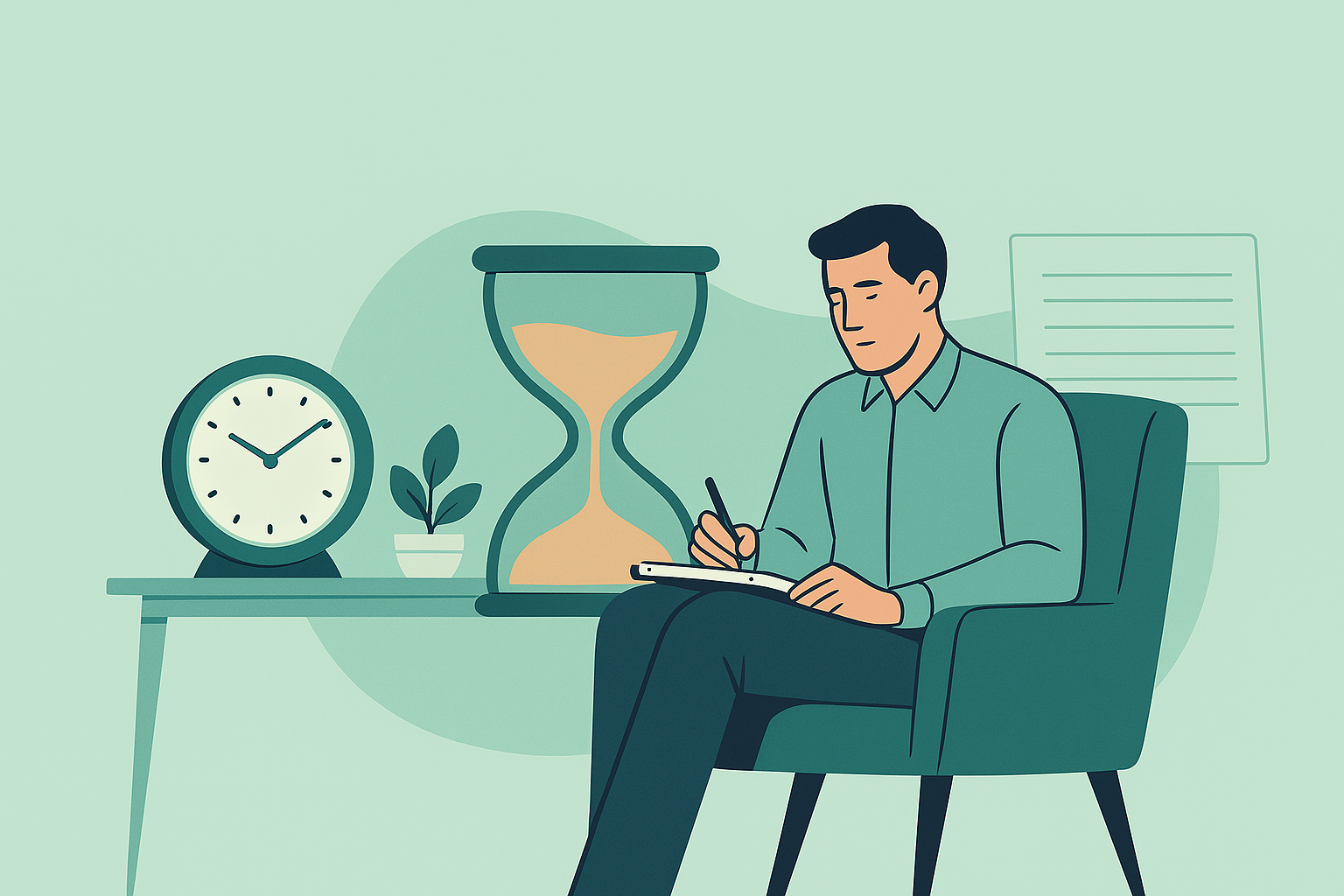
Often, the session itself is just the tip of the iceberg. What patients see is 50 minutes of conversation. What they don’t see are the many minutes before and after, when therapists get into the right frame of mind, reflect, write notes and plan the next step. This work remains invisible, yet it is crucial for quality, structure and their own wellbeing.
More than just documentation: Why the 15 minutes around each session matter
Time is precious in psychotherapy – not only during the session itself, but also before and after. Preparation, reflection and documentation are key components of high-quality treatment. But how much time is officially available for this? Since the introduction of the Anordnungsmodell in Switzerland (the model under which psychological psychotherapists bill health insurance on a physician’s referral), it has been clearly regulated that up to 15 minutes of preparation and follow-up time may be billed per session.
Tariff item PE010 covers, among other things:
- Reviewing files and documentation
- Preparing the room and materials
- Organisation and case-related follow-up work
In practice, however, much of this time is now spent purely on documentation, often down to the last minute. That’s understandable, but it diminishes the real value of these 15 minutes: space for depth of content, quality assurance and self-care.
Why these 15 minutes are so important
Preparation and follow-up are not “side issues”. They safeguard the quality of therapeutic work and create space for:
- structured planning
- professional reflection
- complete and secure documentation
In reality, though, things often look different:
Before the session, quickly skimming the last note, clearing your head after the previous hour, getting materials ready, picking up the thread again.
And after the session, sorting your thoughts, documenting the progress, adding diagnoses, planning the next setting – and then there are still the handwritten notes that have to be transferred to the file at some point.
What should be time for structure and reflection can easily turn into a struggle between two appointments. The 15 minutes intended for quality assurance become a race against the clock, often at the expense of your own recovery and concentration.
Efficiency and self-care go hand in hand
So many tasks, and all of them important: planning, documenting, reflecting, organising.
But how can you fit all this into everyday practice without your recovery or concentration suffering in the end?
This is where modern tools like PlaynVoice come in. With PlaynVoice, an often stressful obligation becomes a clear, structured process. The AI creates precise notes, and therapists gain time back without compromising on quality or billing.
And the difference is noticeable: instead of documentation stress, there is breathing space. Time to take a breath, collect yourself or prepare specifically for the next session.
What does this mean in concrete terms?
→ Tariff item PE010 still applies.
→ The effort decreases, and your room for manoeuvre increases.
In this way, efficiency becomes a real advantage – not at the expense of quality, but in the interest of self-care and better work organisation.
More flexibility through efficient processes
Documenting more efficiently gives you more flexibility in your everyday practice, which you can use according to your own needs:
- Deliberate breaks to work with focus and mindfulness in the long term
- Appointments at off-peak times (e.g. early in the morning or in the evening)
- More closely scheduled appointments, if that suits your own rhythm
Efficiency should not lead to additional strain but should open up possibilities. This creates a balance between economic viability and wellbeing – both of which are foundations for sustainable therapeutic work.
<callout-box>Time for quality starts with smarter documentation. Try PlaynVoice for free now.<callout-box>
Weitere Artikel


Willst du es selbst ausprobieren?
Bei einem kurzen Gespräch erklären wir dir weitere Details und geben dir Zugang zu PlaynVoice. “Probiere got über studiere.”